


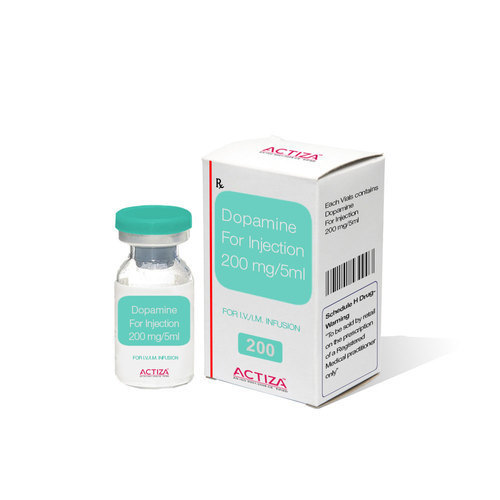
Product Details:
- Melting Point 128 - 130C
- CAS No 51-61-6
- Assay 98% - 102%
- Purity 99% (API Standard)
- Molecular Formula C8H12ClNO2
- Physical Form Injection
- Solubility Freely soluble in water
X
Dopamine Injection Price And Quantity
- 1 Piece
Dopamine Injection Product Specifications
- Adults
- Clear, colorless solution
- Pharmaceutical Injection
- Freely soluble in water
- 3004
- Sterile, ready to use, preservative-free
- 10 x 5 ml ampoules
- As directed by physician
- 99% (API Standard)
- C8H12ClNO2
- Store below 25C, protect from light
- 24 months
- Dopamine Hydrochloride
- Injection
- 51-61-6
- 128 - 130C
- 98% - 102%
- Sodium metabisulfite, Water for injection
- Used in management of shock and low blood pressure
- Glass ampoules
- Intravenous infusion
- Genuine Pharmaceutical Company
- Parenteral
- Prescription
- 40 mg/ml
- IP/BP/USP
Dopamine Injection Trade Information
- 1000 Piece Per Month
- 7 Days
Product Description
Dopamine Injection is a stimulating medication which is administered intravenously for treating severe low blood pressure, cardiac arrest, and slow heart rate. Dopamine is known to have molecular formula C8H11NO2 with molar mass of 153.18 g/mol. This injection also shows importance in various other health conditions including schizophrenia, Parkinsons disease, and bipolar disorder. It is known to work by increasing excretion of sodium by kidney resulting in increase of urine output, BP, & heart rate. For having very low half-life of around a minute, Dopamine Injection is most commonly given in drip form in accordance with individuals health condition.
Uses : Dopamine 200mg injection is used in the treatment of heart failure and decreased blood pressure
How it works : Dopamine 200mg injection makes the heart pump blood with more strength and force, therefore, increasing the blood pressure.
Common side effects : Breathlessness, Headache, Palpitations, Increased heart rate, Arrhythmia, Vomiting, Nausea, Chest pain, Decreased blood pressure
Precision Treatment for Shock and Hypotension
Dopamine Injection offers targeted and effective management for patients experiencing shock or critically low blood pressure. Its rapid action and controlled intravenous infusion help restore vascular tone and improve vital organ perfusion, providing stabilization when prompt intervention is necessary.
Stringent Quality and Safety Standards
Prepared according to IP/BP/USP pharmacopoeial standards, Dopamine Injection ensures maximum purity (99%) and reliability. Each ampoule is sterile, preservative-free, and individually packed in glass, minimizing contamination risks and ensuring delivery of a ready-to-use therapeutic solution.
Safe and Easy Administration
Designed specifically for parenteral (intravenous) use in adult patients, Dopamine Injection comes in a clear, colorless solution, freely soluble in water. Healthcare professionals can administer this medication with confidence, as it meets strict assay (98%102%) and storage requirements, ensuring therapeutic efficacy.
FAQs of Dopamine Injection:
Q: How should Dopamine Injection be administered?
A: Dopamine Injection is to be given via intravenous infusion under medical supervision, following the dosage guidelines provided by a physician. Healthcare providers will dilute and administer the solution directly into a vein, closely monitoring the patient for therapeutic response.Q: What conditions are treated with Dopamine Injection?
A: This medication is indicated for use in the management of shock and hypotension (low blood pressure), especially when caused by conditions like heart failure, trauma, or sepsis. It helps restore blood pressure and organ perfusion in critically ill adults.Q: When is Dopamine Injection typically used during patient care?
A: It is used in hospital or critical care settings whenever rapid restoration of blood pressure and circulation is needed due to shock or severe hypotensive episodes in adult patients. Dosage and timing are determined by a physician based on patient condition.Q: Where should Dopamine Injection be stored before use?
A: The ampoules should be stored below 25C and protected from light to maintain stability. Proper storage ensures that the medication remains effective throughout its 24-month shelf life.Q: What is the process for preparing Dopamine Injection for administration?
A: A healthcare professional will dilute the Dopamine Injection, as per medical protocol, prior to intravenous infusion. The solution, provided in sterile glass ampoules, is preservative-free and ready to use after proper dilution.Q: Are there any special usage precautions with Dopamine Injection?
A: Yes, Dopamine Injection should only be administered by qualified medical personnel. It is prescription-only and not suitable for patients with known hypersensitivity to dopamine hydrochloride or its inactive components such as sodium metabisulfite.Q: What are the key benefits of Dopamine Injection in emergency care?
A: Dopamine Injection offers rapid and reliable support in acute situations by promptly increasing blood pressure and improving blood flow to vital organs, which can be life-saving in cases of shock or severe hypotension.Tell us about your requirement

Price:
Quantity
Select Unit
- 50
- 100
- 200
- 250
- 500
- 1000+
Additional detail
Mobile number
Email

Other Products in 'Cardiovascular Drugs' category
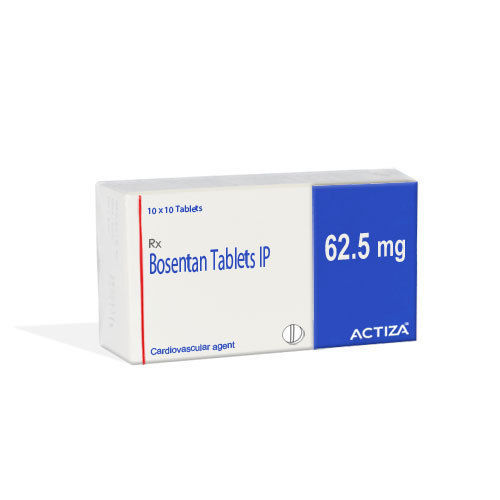
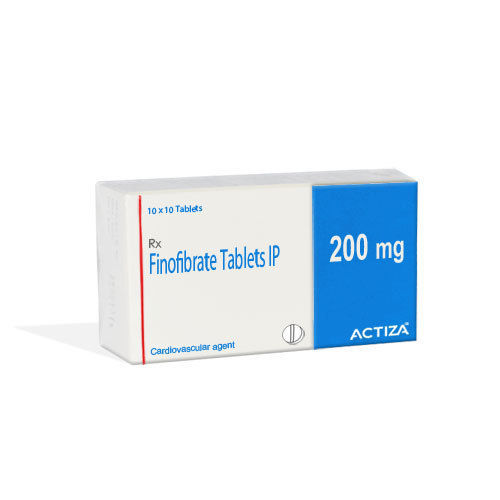
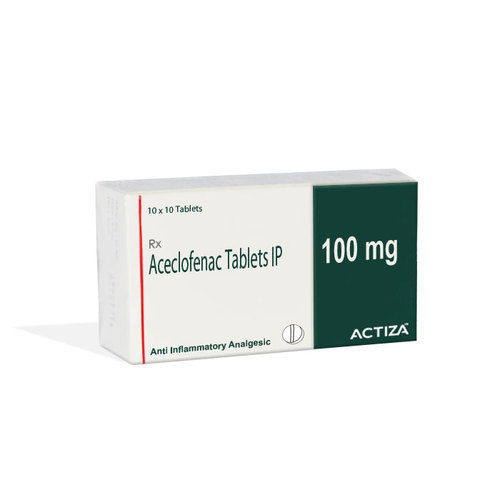

We deal in bulk foreign inquiries.
ACTIZA PHARMACEUTICAL PRIVATE LIMITED
GST : 24AAPCA8809B1ZQ
GST : 24AAPCA8809B1ZQ
Contact Details

- 245-405, Royal Square, Utran, Surat - 394105, Gujarat, India
- Phone : 07971189326

- Mr Milan Sojitra (BDM)
- Mobile : 07971189326

|



ACTIZA PHARMACEUTICAL
All Rights Reserved.(Terms of Use)
Developed and Managed by Infocom Network Private Limited.
Developed and Managed by Infocom Network Private Limited.
